
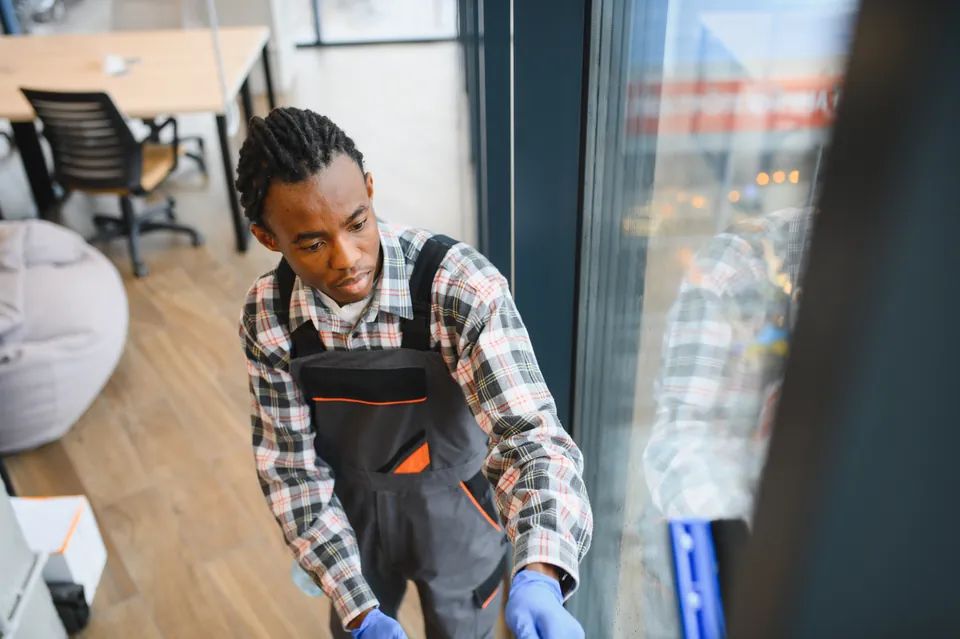
What is the difference between a day porter and nightly janitorial?
The difference is when the work happens and what it is for. A day porter is on site during operating hours. Their job is continuous upkeep: catching messes as they happen, keeping restrooms stocked and keeping the spaces people see looking right all day.
Nightly janitorial happens after the building empties. The crew can work through every room without interrupting anyone, which makes it the right time for vacuuming, mopping, full restroom cleaning and emptying every bin.
Think of it this way: the nightly crew resets the building, and the day porter maintains the reset. 6 Log Solutions offers both day porter service and nightly janitorial, so you can match coverage to how your building is actually used.
Neither option is "better" in general. The right choice depends on how many people use your building during the day, how visible your common areas are to visitors and how quickly small problems turn into complaints. A quiet back-office building and a busy medical office tower can have the same square footage and very different needs.
What does a day porter do?
- Keep lobbies and common areas tidy, wipe surfaces and keep entryways clean
- Check and clean restrooms throughout the day and restock soap, paper towels and toilet paper
- Remove trash and recycling before bins overflow
- Disinfect high-touch surfaces such as door handles, elevator buttons, handrails and light switches
- Reset meeting rooms and break areas, wipe tables and replenish supplies
- Support events with setup, cleanup and last-minute requests
What does nightly janitorial include?
- Floor maintenance: vacuuming carpets, mopping hard floors and spot cleaning
- Trash and recycling collection with liner replacement
- Cafeteria and break area cleaning, including appliances, counters and tables
- Restroom cleaning and disinfection of toilets, urinals, sinks and faucets, plus restocking
- Cleaning and disinfecting high-touch surfaces such as desks, counters, door handles and light switches
Which is better for your facility?
High-traffic, public-facing buildings
Corporate lobbies, medical office buildings and multi-tenant properties usually benefit from both. Visitors judge the building during the day, and restrooms and entrances need attention between night cleanings.
Standard offices
Many offices run well on nightly janitorial alone, with a part-time porter added during peak hours or busy seasons.
Schools and universities
Daytime custodial coverage handles spills, restrooms and lunch periods, while evening crews clean classrooms after students leave. See schools and universities.
Low-traffic or after-hours sites
Spaces with light daytime use may need only scheduled nightly or periodic cleaning.
How many day porter hours does your building need?
There is no formula that fits every building, but a few factors drive the answer:
- Foot traffic and visitors. Lobbies and restrooms that see a steady flow of people need more frequent attention.
- Number and size of restrooms. Restroom checks and restocking are often the biggest share of a porter's day.
- Shared spaces. Busy break rooms, cafeterias and conference rooms add reset work after each use.
- Peak periods. Arrival times, lunch and dismissal or shift changes may need more coverage than mid-afternoon.
- Season. Snowy months can justify extra hours at entrances.
- Events. Buildings that host frequent meetings or events need setup and cleanup support.
Many facilities start with coverage during the busiest part of the day, then adjust based on what the porter and building occupants report. Because 6 Log's day porter service is customizable, from full-time to part-time or task-focused coverage, it can change as your needs do.
How do day porters and night crews work together?
The two roles work best when they share information. A simple handoff log, paper or digital, lets the day porter note issues the night crew should address: a stain that needs extraction, a restroom fixture that needs maintenance, a supply running low. The night crew can note anything the porter should watch the next day.
It also helps to divide the work on purpose. Nightly crews handle the heavier tasks that would disrupt occupants, such as scrubbing floors, deep restroom cleaning and full trash removal. Porters focus on upkeep and response: restocking, spot cleaning, high-touch wipe-downs and anything urgent. When each role knows its scope, nothing falls between shifts and nothing gets done twice.
What does a day porter's route look like?
- Opening walk-through. Check entrances, lobby and restrooms, put out mats and signs as needed, and restock supplies before people arrive.
- Restroom rounds. Check and clean restrooms on a repeating loop through the day, restocking soap, paper towels and toilet paper.
- High-touch wipe-downs. Clean and disinfect door handles, elevator buttons, handrails and light switches on a regular cycle.
- Common areas and break rooms. Reset tables, wipe counters, empty trash and recycling, and restock break supplies after busy periods.
- Meeting room resets. Clean up after meetings so rooms are ready for the next group.
- On-call response. Handle spills, accidents and special requests as they come up.
- Handoff. Log anything the night crew should address.
When should you add a day porter to nightly service?
If you already have nightly janitorial, these signs suggest daytime coverage would help:
- Restrooms run out of supplies or look neglected by early afternoon
- Trash and recycling bins overflow before the night crew arrives
- Visitors and tenants comment on lobby or restroom conditions
- Office staff or receptionists end up handling spills and restocking
- Break rooms and conference rooms stay messy between uses
- Winter entrances stay wet and dirty for most of the day
- You host events or tours that need the building to look its best
You do not have to commit to full-time coverage to test it. A part-time porter during your busiest hours can show quickly whether daytime service makes a difference for your building and the people in it.
Should a day porter disinfect, or is cleaning enough?
For most non-healthcare buildings, routine cleaning does most of the work. CDC's >facility cleaning guidance explains that cleaning with soap or detergent removes most germs from surfaces, sanitizing reduces what remains, and disinfecting kills germs that remain after cleaning. CDC recommends cleaning high-touch surfaces regularly and disinfecting areas where people have obviously been ill, and notes that its guidance does not apply to healthcare settings.
That is a good fit for a porter's day. Regular cleaning of high-touch points, plus prompt cleanup and disinfection when someone is sick in a restroom or common area, handles what a nightly crew cannot address until hours later. Healthcare facilities follow their own infection prevention policies, and 6 Log's background working alongside infection preventionists applies there.
How does Denver weather change the equation?
Colorado winters make daytime coverage more valuable. Snow, slush and deicer residue get tracked in from the first arrival to the last departure. A nightly crew can scrub the floors clean, but by mid-morning on a snowy day the lobby may already be wet and filmed over.
A day porter can dry entrances repeatedly, swap saturated mats, keep wet floor signs where they belong and spot clean residue before it spreads. Some facilities add porter hours only for the winter months, then scale back in summer. For a deeper look, read Denver winter floor care and mag chloride residue.
Can you use both day porter and nightly service?
Yes, and it is the most common setup in busy buildings. The two roles complement each other: nightly crews handle the heavy, disruptive work when nobody is around, and porters handle the visible, time-sensitive work while people are there. Day porter service can be full-time, part-time or focused on specific tasks you prioritize.
Coverage also depends on staffing. 6 Log can staff these roles through a Permanent Management Team that 6 Log directly manages, or through temp-to-hire janitorial staffing if you want to evaluate workers before hiring. 6 Log serves facilities across the Denver metro area, including Denver, Centennial and Greenwood Village.