
Why do commercial floors take a beating in a Denver winter?
Every storm brings the outside in. Snow and slush melt off boots, gravel and grit come along for the ride, and deicer residue from streets, parking lots and sidewalks ends up on lobby floors, in elevators and down hallways.
The City and County of Denver's >snow removal page explains that the city uses liquid and solid deicers on main streets, and that downtown it uses liquid magnesium chloride, chosen over dry material to reduce particulate matter in the air. Many parking lots and sidewalks across the metro area are treated as well. The result for property managers is a steady film of deicer-laden water and grit arriving at every entrance from fall through spring.
That residue does not stay at the door. Without a plan, it spreads with each footstep, and by the end of a snowy week the whole first floor can look dull and feel tacky.
What does magnesium chloride residue do to floors?
Magnesium chloride deicer is a liquid brine that keeps working after it leaves the road. When it is tracked inside, a few things tend to happen:
- Hard floors dull. As tracked-in brine dries, it can leave a hazy, filmy layer on vinyl, sealed concrete, stone and finished floors.
- Floors get slick. The film can feel slippery, especially when it is rewetted by fresh slush.
- Carpet holds it. Entry carpet and walk-off areas absorb brine and grit, and residue can wick back to the surface as the carpet dries.
- Grit scratches. Sand and fine gravel tracked in with snow act like sandpaper underfoot.
None of this is a reason to panic. It is a reason to treat winter floor care as its own routine, with more attention at entrances and different cleaning steps than you use in summer. The earlier in the season you start, the less residue builds up in floor finish, grout and carpet, and the easier the spring recovery becomes.
How do you keep ice melt from being tracked inside?
The cheapest floor to clean is the one that never gets dirty. Prevention starts outside:
- Clear walkways promptly. Denver's snow page notes that after receiving a notice, businesses have four hours, and residences 24 hours, before an inspector re-checks the sidewalk and a fine may apply. Cleared walks also mean less slush carried inside.
- Use a matting system. A coarse scraper mat outside, a wiper-scraper mat in the vestibule and an absorbent wiper mat inside give shoes several chances to drop water and grit before they reach your floor.
- Make mats long enough. Short mats fill up fast in a storm. More walk-off length catches more.
- Clean and swap mats often. A saturated mat stops working. Vacuum mats during the day and rotate in dry ones when they are soaked.
These steps reduce what you have to remove later, which protects floor finishes and saves labor.
How do you clean mag chloride residue off hard floors?
- Remove dry soil first. Dust mop or vacuum grit before any wet cleaning so you are not grinding sand into the finish.
- Use the right cleaner. Choose a product your floor or finish manufacturer approves. Many facilities use a cleaner formulated for deicer residue during winter months.
- Scrub, do not just mop. An auto-scrubber or scrubbing pad lifts film that a mop spreads around.
- Change water often. Dirty solution redeposits residue. Fresh water and a clean pickup matter.
- Rinse if needed. Some cleaners call for a clear-water rinse to remove remaining film.
- Let it dry and check. Look across the floor at an angle. A remaining haze means another pass is needed.
What about carpet, tile and grout in winter?
Carpet at entrances needs more than vacuuming during a snowy season. Brine and grit settle into the pile and backing, and residue can keep reappearing as the carpet dries. Periodic extraction removes what vacuuming leaves behind. 6 Log's carpet cleaning can be scheduled during or after the season for high-traffic entries and corridors.
Tile floors have their own challenge: grout is porous and holds onto soil and residue. If your lobby tile looks darker in the joints every spring, tile and grout cleaning can restore it before the next season. Glass doors and sidelites also collect splash from slush, which is where window cleaning comes in for storefronts and lobbies.
How do you prevent slip-and-fall risks at entrances?
Wet, residue-coated floors near doors are a real slip risk for staff and visitors. OSHA's >walking-working surfaces standard requires employers to keep walking-working surfaces maintained free of hazards such as leaks, spills, snow and ice, and to keep floors clean and, to the extent feasible, dry.
Practical steps during storms:
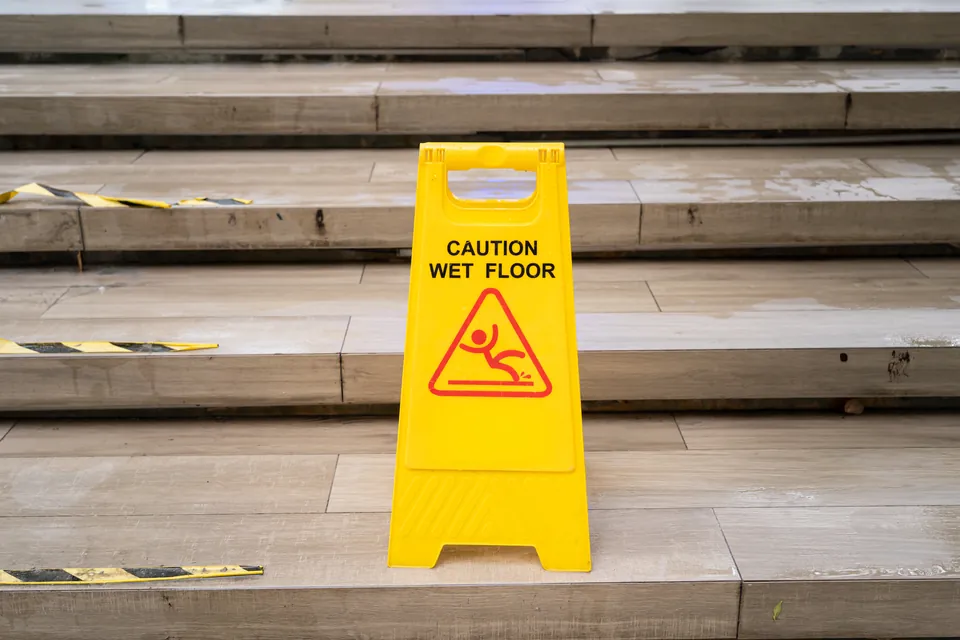
- Keep wet floor signs at every entrance and move them as the wet zone grows.
- Dry mop entrances repeatedly during arrival and departure peaks, not just once.
- Watch elevator floors and stairs near entrances, which collect drips quickly.
- Check loading docks and back doors that staff use, not only the main lobby.
The common thread is frequency. One cleanup at the start of the day cannot keep up with a building's worth of foot traffic on a snowy morning.
How should you prepare your floors before the first storm?
- Inspect floor finish at entrances and recoat worn areas before the season, since a healthy finish is easier to clean
- Count and check entrance mats, and order replacements or extra sets for rotation
- Stock a floor cleaner your floor manufacturer approves for winter residue
- Confirm who clears and treats sidewalks and walkways, and how fast after a storm
- Stage wet floor signs, dry mops and absorbent mats near each entrance
- Plan staffing for storm days, including extra daytime coverage if needed
- Schedule a spring recovery clean for carpet, tile and floor finish
What should a spring cleanup include after deicer season?
When the last storm passes, floors usually need more than a routine clean. Months of residue can build up in finish, grout and carpet backing even with good daily care.
A spring recovery clean typically includes a deep scrub of hard floors at entrances and main corridors, with refinishing where the finish has worn through. Entry carpets and walk-off areas benefit from extraction to pull out the brine and grit that settled during the season. Tile and grout near entrances and in lobbies can be deep cleaned to remove the darkened residue in the joints. Mats should be cleaned thoroughly or replaced if they are worn.
Spring is also a good time to review what worked. Were mats long enough? Did any entrance consistently stay wet? Was there enough daytime coverage on storm days? Those answers shape next winter's plan and keep floor care costs predictable instead of reactive.
What should a day porter do on a snow day?
- Put out dry mats and wet floor signs before the morning rush
- Dry mop entrances, vestibules and elevator landings repeatedly during peak arrival times
- Swap saturated mats for dry ones and vacuum mats between peaks
- Spot clean tracked residue in lobbies and hallways before it spreads
- Check stairwells, back doors and loading docks staff use
- Watch restroom floors near entrances, which collect slush quickly
- Note problem areas for the night crew's deeper scrub
Who should handle winter floor care, day porters or the nightly crew?
Both, with different jobs. A day porter keeps entrances, lobbies and restrooms under control while the building is occupied: drying floors, swapping mats, moving signs and spot cleaning tracked residue as it happens. The nightly janitorial crew resets the floors after hours with scrubbing and deeper cleaning when the building is empty.
For many Denver-area offices, medical buildings and schools, winter is the season when a daytime presence pays off most. Read day porter vs. nightly janitorial for a full comparison. 6 Log provides staffing and facility services across the metro area, including Denver, Aurora and Lakewood.