
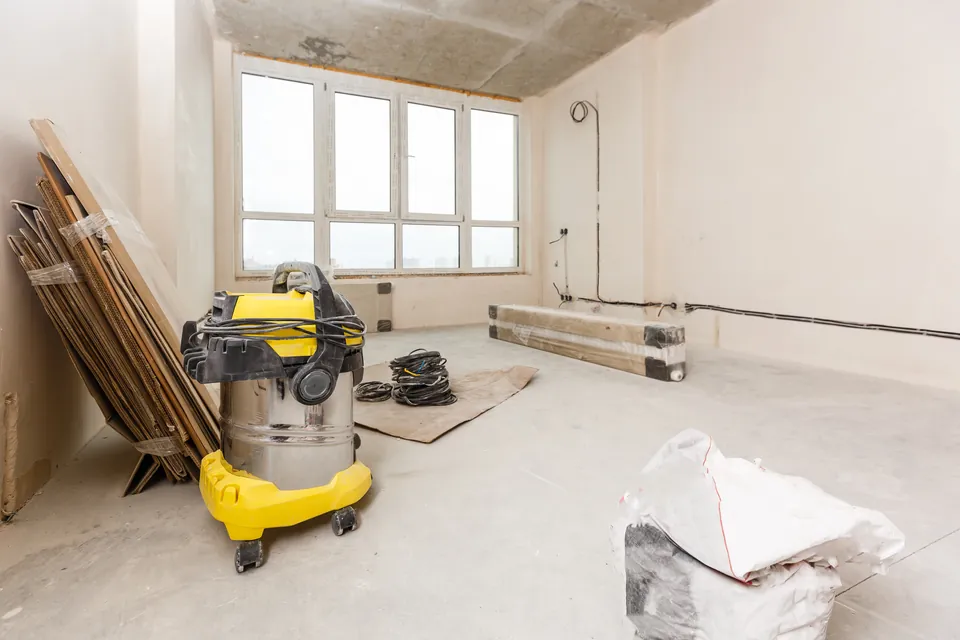
What is post-construction cleaning?
Post-construction cleaning is the work that turns a finished build-out into a usable space. Construction and renovation leave behind more than visible debris: fine dust settles on every surface and inside fixtures, labels and adhesives cling to glass and doors, and residue coats new floors.
It is typically handled in stages. A rough clean removes bulk debris while trades are still finishing. A final clean, after construction is complete, details every surface. A touch-up clean right before move-in catches dust that resettled and anything trades disturbed during punch-list work.
6 Log Solutions provides post-construction cleaning services for contractors, developers and property owners, using low-dust practices and coordinating with project teams so the space is ready on schedule.
What is the difference between rough, final and touch-up cleaning?
Rough clean
Happens while trades are still working. Crews remove bulk debris, packaging and leftover materials so work can continue safely and the final clean starts from a manageable state.
Final clean
Happens after construction is complete in an area. This is the detailed, top-to-bottom clean: dust removal from every surface, fixtures, glass, restrooms, break areas and floors.
Touch-up clean
Happens right before move-in, opening or inspection. It catches dust that resettled, fingerprints from punch-list work and anything disturbed after the final clean.
Why does construction dust need special handling?
Construction dust is fine, and it moves. Dry sweeping and blowing surfaces off can put it back in the air, where it drifts and resettles on surfaces you already cleaned. Some construction dust also contains respirable crystalline silica from concrete, stone and similar materials.
That is why OSHA's >construction silica standard restricts certain cleanup methods for construction employers. Where it could contribute to employee silica exposure, the standard does not allow dry sweeping or dry brushing unless wet sweeping, HEPA-filtered vacuuming or other methods that minimize exposure are not feasible, and it limits using compressed air to clean clothing or surfaces. OSHA's >silica FAQ notes the standard defines a HEPA filter as at least 99.97 percent efficient at removing particles of 0.3 micrometers.
Whatever your project's specific requirements, the lesson for cleaning is the same: capture dust with HEPA vacuums and damp methods rather than pushing it around.
What is on a post-construction cleaning checklist?
- Remove construction dust from all surfaces, including ledges, sills and tops of door frames
- Clean vents, diffusers and accessible HVAC surfaces
- Clean light fixtures and ceiling components
- Detail walls, doors, frames, switch plates and fixtures
- Remove non-permanent adhesives, labels, tape and residue
- Clean interior windows, glass and frames
- Clean and detail restrooms, including fixtures, partitions and dispensers
- Clean break areas, cabinets inside and out, and appliances
- Vacuum, scrub and detail floors, edges and corners
- Remove trash and complete final site cleanup
What order should post-construction cleaning follow?
- Walk the space. Confirm the scope with the contractor or project manager, note finishes that need special care and check that trades are done in each area.
- Remove bulk debris. Clear leftover materials and trash so detailed cleaning can start.
- Work top to bottom. Start with ceilings, vents, diffusers and lights, then walls, doors and frames, so falling dust lands on areas not yet cleaned.
- Detail glass and fixtures. Remove labels and adhesives, clean windows and frames, and detail restrooms and break areas.
- Do floors last. HEPA vacuum, then scrub or finish hard floors according to manufacturer guidance.
- Final walk-through. Review with the project team and touch up anything missed before occupancy.
Which new finishes need extra care during cleanup?
New materials are at their most vulnerable right after installation, and the wrong tool or chemical can damage them before anyone moves in. Areas that deserve extra care include:
- Glass and window frames. Labels and construction residue need surface-safe removal methods that will not scratch the glass.
- Stainless steel and metal fixtures. Clean with products suited to the finish, wiping with the grain.
- New flooring. Follow the flooring manufacturer's guidance on when and how the floor can be wet cleaned or finished.
- Painted walls and trim. Fresh paint may need time to cure before it can be wiped.
- Millwork and countertops. Natural stone, laminate and wood each need appropriate cleaners.
When in doubt, ask the contractor or check the product manufacturer's care instructions before cleaning. 6 Log performs post-construction cleaning with attention to protecting new materials, finishes and equipment.
What should a post-construction cleaning scope include?
A written scope prevents most disputes at the end of a project. It should spell out the areas and square footage included, which cleaning phases are in scope (rough, final, touch-up or all three), special surfaces and the methods required for them, access hours and coordination with the contractor, how trash and debris are handled, and how completion is confirmed, such as a final walk-through with the project manager.
For sensitive environments, add whether verification such as ATP testing is required and what documentation the facility needs at handoff. Clear scopes and service documentation are part of how 6 Log approaches every post-construction job.
What safety steps matter during post-construction cleaning?
Construction sites carry hazards that a typical office cleaning does not, even after the main work is done. A careful post-construction crew plans for them:
- Coordinate with active trades. Clean only areas the contractor has released, and know where work is still happening.
- Use proper protective equipment. Gloves, eye protection and, where dust is present, respiratory protection appropriate to the conditions.
- Control dust at the source. HEPA vacuums and damp methods rather than dry sweeping or blowing dust around.
- Work safely at height. Ladders and lifts for ceilings, vents and high fixtures require proper setup and training.
- Watch for sharp debris. Screws, nails, blade fragments and cut materials hide in corners and along floor edges.
- Handle chemicals correctly. Adhesive removers and floor products need ventilation and label-directed use.
Good safety practice also protects the building. Careful handling prevents damage to new finishes and equipment that would otherwise delay occupancy.
How is post-construction cleaning different in healthcare spaces?
Renovations in hospitals, surgical centers and clinics raise the bar. Dust control matters more around patients and sterile areas, and an operating room cannot return to service until it has been thoroughly cleaned and disinfected.
For those environments, 6 Log's operating room deep cleaning and disinfection includes post-construction or renovation OR turnover. The scope uses a low-dust, controlled top-to-bottom method designed to protect laminar airflow, covers ceiling tiles, vents, walls, equipment and floors, and finishes with hospital-grade disinfection and documentation.
Optional ATP cleaning verification can be added to any sensitive post-construction project to give you measurable results before the space opens, rather than relying on how surfaces look.
When should you schedule post-construction cleaning?
Book it early and build it into the project schedule, not as an afterthought the week before move-in. A few timing tips:
- Schedule the final clean after trades are finished in an area, so work does not get undone.
- Coordinate with the HVAC contractor. Dust in ducts and on diffusers can redistribute when the system runs.
- Leave time for a touch-up clean between punch-list work and occupancy or inspection.
- In Colorado winters, plan for tracked-in snow, mud and deicer during the final weeks. Protect new floors at entrances and see our guide to winter floor care and mag chloride residue.
Who should handle post-construction cleaning?
Look for a team with experience in post-construction work, low-dust and surface-safe methods, flexible scheduling to meet project timelines, a clear written scope and documentation, and reliable coordination with contractors and facility teams.
After the project wraps, many facilities move straight into ongoing service, such as nightly janitorial or window cleaning. 6 Log serves commercial projects across Colorado with a focus on the Denver metro area, including Denver, Aurora and Englewood.